
Traveling? Your Legs Need Protection.

Long flights and road trips can slow your circulation — and increase your risk of blood clots.
At Texas Cardiac and Vascular Institute (TCVI), we frequently evaluate patients who experience leg swelling or pain after travel. Understanding how travel affects your vascular system can help you prevent serious complications.
Why Travel Increases Clot Risk
When you sit for long periods, your leg muscles stop contracting. That slows blood flow and allows blood to pool in the lower legs.
Prolonged immobility increases the risk of Deep Vein Thrombosis (DVT) — a blood clot that forms in a deep vein, usually in the leg.
If part of that clot travels to the lungs, it can cause a pulmonary embolism, a potentially life-threatening emergency.
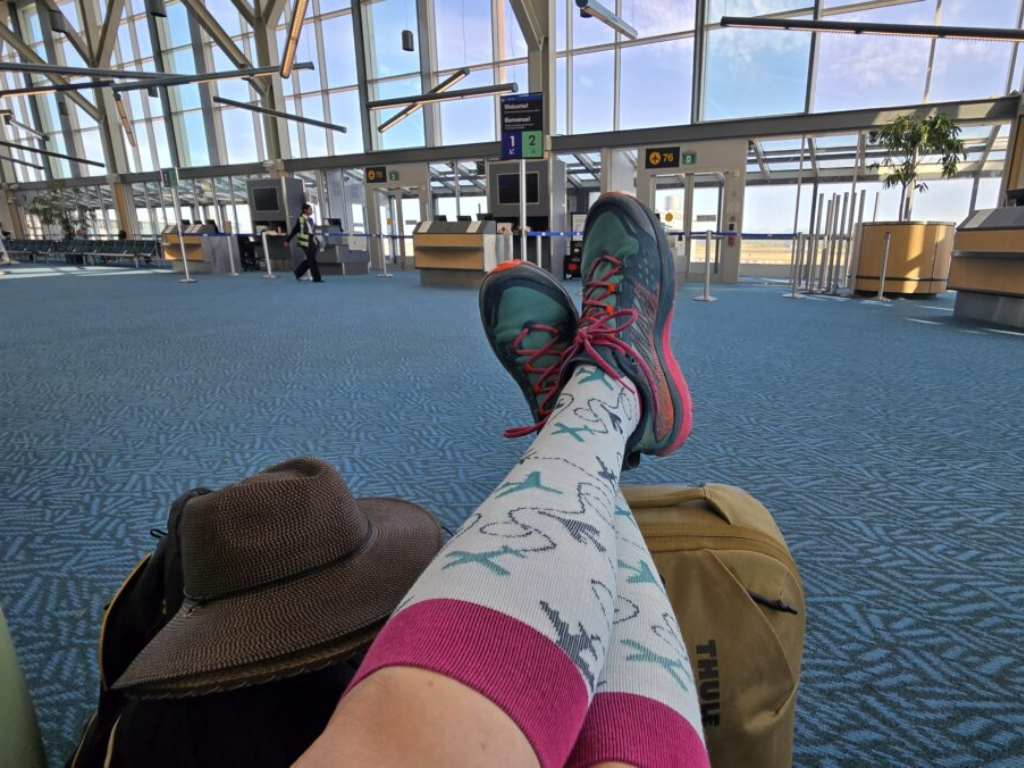
How Compression Socks Help
Medical-grade compression socks apply graduated pressure — tighter at the ankle and gradually looser up the leg — to support circulation.
Benefits include:
Reduced swelling
Improved blood flow
Lower DVT risk
Less leg fatigue
They are especially helpful for travelers over 60, pregnant individuals, and those with vascular risk factors.
Additional Travel Tips for Vascular Health
Stand and walk every 1–2 hours
Flex and extend your ankles while seated
Stay hydrated
Avoid crossing your legs
If you experience leg swelling, pain, warmth, or redness after travel, seek medical evaluation.
At Texas Cardiac and Vascular Institute, we provide vascular screenings to assess your clot risk and evaluate circulation concerns.
Before your next trip, protect your vascular health.